Emergency Water Extraction in Tyler, TX
Every hour water remains pooled inside a building in Tyler, TX, the scope of structural damage expands. WaterOut provides comprehensive emergency water extraction across Tyler, TX, deploying industrial vacuum equipment and submersible trash pumps to eliminate standing liquid. Fast extraction protects structural subflooring in Tyler, TX, stops water wicking through wallboard, and adheres to federal moisture mitigation guidelines. Property owners throughout Tyler, TX can initiate dispatch assistance by calling (800) 555-0142.
Need Water Pumped Out?
Speak directly with an extraction professional. Commercial equipment dispatched 24 hours a day to Tyler and across Smith County.
Call this number: (800) 555-0142Emergency Water Extraction Services in Tyler, TX
Emergency water extraction is the mechanical removal of standing, pooled, and absorbed liquid water from an indoor environment. Unlike general surface cleaning, professional extraction utilizes industrial-grade submersible trash pumps, truck-mounted extraction vacuums, and weighted compression tools to extract high volumes of water out of subflooring, carpets, and concrete slabs.
Our core extraction capabilities in Tyler include:
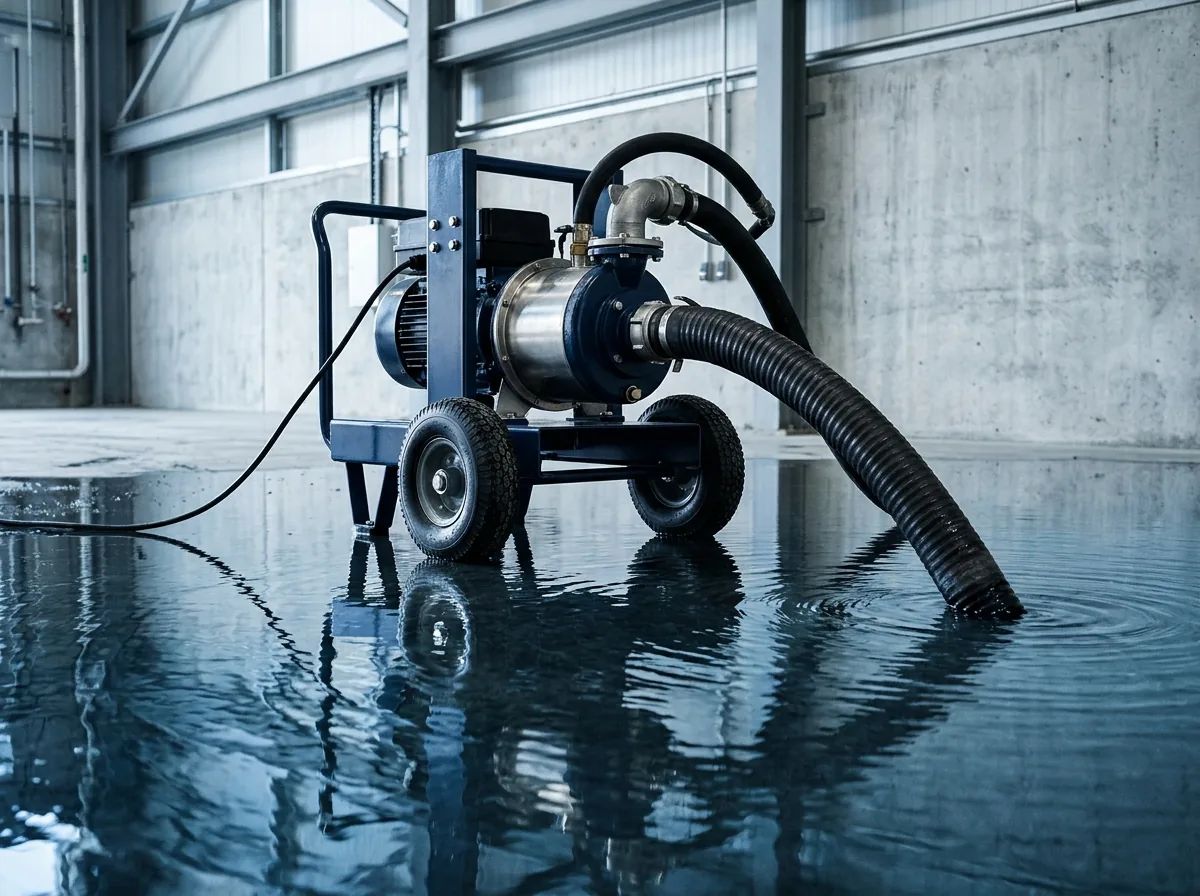
Standing Water Removal
Pumping bulk pooling water out of basements, crawlspaces, ground-level living areas, and commercial properties.
Burst and Ruptured Pipe Extraction
Extracting water released from high-pressure plumbing line breaks, frozen pipes, and failed supply valves.
Sump Pump Failure and Basement Pumping
Evacuating accumulated water when a mechanical sump pump fails during heavy rainfall or power loss.
Sewage and Contaminated Water Extraction
Safely extracting Category 3 black water caused by sewer main backups or toilet drain reversals using biohazard containment protocols.
Appliance Overflow Water Removal
Clearing deep water spread across kitchens, utility rooms, and multi-floor layouts from failed water heaters, washing machines, or dishwashers.
Structural Cavity and Subfloor Extraction
Extracting water trapped beneath finished floor coverings, behind baseboards, and inside lower wall cavities.
Water Extraction in Tyler, TX: Available 24/7
Plumbing failures and localized flood emergencies do not wait for standard business hours. Water entering a structure at midnight continues to saturate framing, baseboards, and subfloors until it is physically extracted. According to guidelines from the Environmental Protection Agency (EPA) and the Centers for Disease Control and Prevention (CDC), mold spores can begin to germinate on damp organic materials within 24 to 48 hours.
WaterOut maintains active telephone dispatch 24 hours a day, 7 days a week for Tyler, TX. Calling (800) 555-0142 connects you immediately with a live professional who gathers critical incident details, reviews urgent safety precautions, and coordinates the deployment of extraction units directly to your property.
Continuous emergency dispatch across Tyler.
Call this number: (800) 555-0142Emergency Water Extraction Near Me in Tyler, TX
When dealing with rising water inside your building, working with an extraction team that understands Tyler makes an enormous difference. Local infrastructure, common architectural foundations, and municipal drainage patterns all influence how water moves through local properties.
WaterOut serves properties across Tyler, covering postal zip codes 75701, 75702, 75703, 75704, 75705, 75706, 75707, 75708, 75709. Whether your property is an older single-family residence, a newly developed subdivision, or a commercial storefront, our extraction crews bring commercial pumping equipment directly to your door. Having dedicated extraction equipment deployed in Smith County helps protect your real estate investment from progressive water migration and long-term secondary structural deterioration.
Curious about how we extract deep subfloor water? See how the process works.
Signs You Need Water Extraction in Tyler, TX
Not all water intrusion creates an immediate visible pond. Often, water travels beneath finished floorboards or inside drywall cavities, leaving subtle warning signs before structural collapse occurs. You should request professional extraction services in Tyler if you notice any of the following conditions:
Standing or Pooling Water
Any visible layer of liquid covering hard surfaces, basements, utility rooms, or crawlspaces.
Squishing or Saturated Carpets
Water rising to the surface when walking across rugs, wall-to-wall carpets, or commercial carpet tiles.
Warping, Cupping, or Buckling Floors
Hardwood or laminate boards swelling, crowning at the edges, or pulling away from the subfloor.
Peeling Paint and Bubbling Baseboards
Moisture wicking upward through drywall paper, causing latex paint to blister or trim to detach.
Musty or Earthy Odors
Damp smells emerging within hours of a storm or pipe leak, indicating persistent trapped moisture.
Sudden Low Water Pressure
Sudden low water pressure paired with the sound of running water inside wall cavities or crawlspaces.
Serving Every Corner of Tyler
We provide comprehensive emergency water extraction across the entire Tyler area, ensuring homeowners and business managers throughout the community have access to professional water removal.
Our technicians provide direct dispatch service across all residential subdivisions, commercial corridors, and municipal sectors of Tyler. Whether responding to plumbing line ruptures in established neighborhoods or storm runoff in newly developed parcels across Smith County, our teams bring industrial extraction vacuums and submersible pumps directly to your location.
Why Tyler Residents Call WaterOut
Selecting WaterOut in Tyler, TX gives property owners access to commercial water pumping power, detailed job documentation, and round-the-clock dispatch.
Clear Estimates
Every project in Tyler, TX receives an itemized cost factor assessment detailing why specific pumping tools and barrier protections are deployed.
Round-the-Clock Phone Line
Calling (800) 555-0142 connects Tyler, TX property owners directly to dispatch personnel ready to gather incident details and coordinate extraction units.
Standards-Based Process
Operations in Tyler, TX comply with recognized IICRC S500 standards, establishing verifiable dry baselines and sanitary conditions on every project.
Local Knowledge
Local knowledge across Tyler, TX ensures extraction units are configured specifically for the foundation demands of common slab-on-grade and crawlspace residential structures.
Local Water Extraction Facts for Tyler, TX
Water extraction requirements vary based on geographic location, local housing density, and surrounding terrain. Here is how local characteristics shape extraction services in Tyler:
110,327 residents
Serving a local population of 110,327 residents requires consistent operational readiness. High residential density and active commercial centers mean extraction equipment must be staged for rapid deployment across varied property types.
Smith County
Located in Smith County, properties in this jurisdiction share common municipal utility systems, stormwater drainage networks, and regional environmental considerations that dictate how runoff and groundwater behave during severe weather.
South Central
Being part of the South Central region means local properties face specific seasonal weather patterns, regional soil composition, and humidity profiles that influence both the speed of water intrusion and the rate of structural drying.
Whitehouse (approximately 8 miles)
Situated approximately approximately 8 miles from Whitehouse, our service routing allows efficient transit and equipment logistics between neighboring population centers.
93 Miles East of Dallas
Located approximately 93 miles east of Dallas, Tyler combines community-focused neighborhoods with access to major regional supply routes, ensuring commercial-grade pumps and drying equipment can be mobilized without supply chain delays.
Common Water Problems in Tyler, TX
Water emergencies in Tyler stem from both internal structural failures and regional environmental factors. The table below outlines the most frequent causes of water intrusion in local homes and commercial properties:
| Incident Type | Typical Source | Water Category | Primary Extraction Challenge |
|---|---|---|---|
| Supply Line Rupture | High-pressure plumbing lines, water heaters | Category 1 (Clean) | High volume released in short timeframe; rapid saturation of drywall and subfloors. |
| Sump Pump Failure | Heavy rainfall, storm runoff, electrical outage | Category 2 (Gray) | Submerged basement flooring; mud and sediment accumulation requiring pump-out. |
| Sewer Backup | Municipal main blockage, tree root intrusion | Category 3 (Black) | Pathogenic biohazards; requires full sanitization and specialized extraction protocols. |
| Appliance Overflow | Washing machine hoses, dishwasher valves | Category 1 or 2 | Water spreading across multiple finished floor surfaces and seeping between floor joists. |
| Severe Storm Runoff | Foundation seepage, window well overflow | Category 2 or 3 | Ground water entering living spaces; perimeter saturation and soil sediment deposits. |
| Roof or Attic Leak | Wind damage, failed flashing, ice dams | Category 1 or 2 | Water traveling through ceiling drywall, insulation cavities, and light fixtures. |
What Affects the Cost of Water Extraction in Tyler, TX
Every water emergency involves a unique combination of structural layout, contamination risk, and volume. Because these factors differ significantly on every property, costs are determined by the specific requirements of the physical situation.
| Cost Influencing Factor | Description of Impact on Scope |
|---|---|
| Water Contamination Category | Category 1 clean water requires standard extraction. Category 2 gray water and Category 3 black water demand extensive personal protective equipment, antimicrobial treatments, and biohazard disposal. |
| Volume and Depth of Standing Water | Shallow surface puddles require vacuum extraction units, whereas deep standing water in basements or crawlspaces requires high-volume submersible trash pumps. |
| Structural Materials Saturated | Non-porous surfaces like concrete release water easily. Porous materials like hardwood, multi-layer subflooring, and insulated drywall absorb moisture deeply and require specialized extraction mats. |
| Need for Controlled Demolition | Trapped moisture behind walls or under saturated carpet pads often requires detaching baseboards, removing unsalvageable padding, or performing precision flood cuts. |
| Accessibility of the Affected Space | Open ground-floor rooms allow straightforward equipment staging. Confined crawlspaces, attics, or multi-story buildings require specialized portable extractors and extended hose runs. |
| Elapsed Time Prior to Mitigation | Water left standing migrates further into structural framing. Prompt extraction keeps the affected footprint smaller and reduces the amount of equipment runtime required. |
To receive a clear, on-site assessment and itemized estimate tailored to your specific situation in Tyler, TX, call our team at (800) 555-0142.
Call this number: (800) 555-0142What to Expect When You Call WaterOut in Tyler
When you contact WaterOut during a water crisis, our team follows a structured protocol to ensure safety, speed, and clear communication:
Immediate Phone Assessment: We collect key details regarding the water source, depth, property type, and safety hazards, while advising you on immediate safety steps.
Dispatch and Arrival: Our technicians arrive on site with high-capacity extraction units, pumps, and diagnostic moisture meters.
Safety Inspection and Source Identification: We confirm that electrical hazards are controlled and ensure the water source is halted.
Comprehensive Moisture Mapping: Technicians inspect the space using thermal cameras and penetrating moisture meters to locate all trapped water pockets.
Bulk Water Extraction: We deploy truck-mounted vacuums and submersible pumps to remove liquid water from floors, subfloors, and cavities.
Antimicrobial Application and Stabilization: We apply EPA-registered sanitizing washes where appropriate and prepare the property for structural drying.
Clear Documentation: We provide an itemized summary of work completed and readings taken to assist with your records or insurance claims process.
Our Water Extraction Process in Tyler, TX
Thorough water extraction requires a methodical approach that prioritizes structural safety and deep liquid removal. Our physical process in Tyler follows five defined phases:
Hazard Assessment & Power Verification
Phase 1: Electrical Risk Identification and Disconnection. Technicians in Tyler, TX conduct an immediate electrical safety review to eliminate shock hazards, confirming that water-exposed circuits are disconnected in line with ESFI recommendations.
High-Volume Physical Extraction
Phase 2: High-Volume Fluid Pumping and Extraction. Industrial submersible trash pumps clear deep standing water from Tyler, TX foundations, while truck-mounted suction extractors pull liquid from soaked floor systems and commercial tile.
Cavity Inspection & Controlled Relief
Phase 3: Precision Flood Cuts and Drywall Breaches. Saturated wallboard in Tyler, TX is cut horizontally 12 to 24 inches above the water level, allowing wet fiberglass insulation to be cleared and damp wall cavities to dry unhindered.
Sanitization & Containment
Phase 4: Microbial Containment and Chemical Washing. Technicians apply professional-grade EPA-registered disinfectants across affected Tyler, TX areas, treating framing according to IICRC S500 cleanliness classifications.
Diagnostic Verification & Transition
Phase 5: Baseline Moisture Metering and Documentation. Calibrated moisture meters compare Tyler, TX structural timber readings to dry reference standards, verifying that all liquid water is cleared before placing dehumidification equipment.
Serving Tyler, TX and Surrounding Areas
In addition to serving properties within Tyler, we extend our emergency water extraction services to neighboring communities across Smith County and the surrounding region:
Emergency Water Extraction in Whitehouse
Providing 24/7 standing water removal, burst pipe cleanup, and emergency extraction for properties in Whitehouse.
Emergency Water Extraction in Flint
Providing 24/7 standing water removal, burst pipe cleanup, and emergency extraction for properties in Flint.
Emergency Water Extraction in Arp
Providing 24/7 standing water removal, burst pipe cleanup, and emergency extraction for properties in Arp.
Emergency Water Extraction in Chandler
Providing 24/7 standing water removal, burst pipe cleanup, and emergency extraction for properties in Chandler.
Local Landmarks and Neighborhoods in Tyler
Our technicians know Tyler well, from its historic central areas to expanding residential communities.
Neighborhoods
We deliver localized extraction services throughout established communities across Tyler. Understanding the prevalent foundation types and plumbing configurations in these areas ensures our crews bring the exact tools needed for each home.
Landmarks
Properties situated near prominent points of interest such as Campbell Building-Union Bus Station and Mayfair Building benefit from our comprehensive local coverage. Whether an emergency affects a commercial facility near these landmarks or a private residence on an adjacent avenue, our dispatch coordinates efficient transit routes.
Historical places
Historic structures and areas around Pollard Residential Historic District often feature traditional plaster walls, aged hardwood floors, and original masonry. Extracting water from older materials requires specialized low-pressure extraction tools and delicate moisture tracking to preserve historic building integrity while removing moisture.
Seasonal Tips for Tyler, TX
Staying ahead of weather-related water emergencies in Tyler, TX requires understanding local seasonal moisture dynamics throughout the four seasons.
Spring
Spring rainfall in Tyler, TX frequently produces intense torrential rainstorms expanding heavy clay soil and forcing foundation water intrusion. Elevated groundwater tables test mechanical sump pumps and perimeter waterproofing.
Summer
Summer months across Tyler, TX bring convective weather and tropical storm downpours and severe summer heat stressing air conditioning condensate lines. Cloudbursts and heavy humidity place intense demand on indoor drainage systems.
Fall
Fall conditions in Tyler, TX routinely involve localized flash flood events overwhelming street gutters and low-lying driveways. Debris accumulation in exterior gutters causes water to cascade down exterior siding.
Winter
Winter weather in Tyler, TX brings severe plumbing hazards connected to hard winter freezes causing uninsulated outdoor bibs and exposed plumbing lines to burst. Uninsulated supply lines in exterior walls can freeze and rupture.
Tyler, TX Water Extraction FAQs
Q:Are commercial water extraction methods different for businesses compared to homes in Tyler, TX?
Commercial facilities in Tyler, TX typically have larger open floor plates, commercial-grade carpet tile, or concrete subfloors that require high-capacity continuous extraction units, whereas residential properties in Smith County often require precision containment around common slab-on-grade and crawlspace residential structures.
Q:What regional climate factors influence water extraction in Tyler, TX?
Located in the South Central climate zone, properties in Tyler, TX regularly experience environmental humidity shifts that affect structural evaporation rates. Extraction technicians calibrate vacuum lift and cavity ventilation to account for outdoor vapor pressure and seasonal precipitation patterns across Smith County.
Q:Does seasonal weather in the South Central region increase the risk of indoor water pooling in Tyler, TX?
Properties throughout the South Central region face seasonal storms that can overwhelm municipal stormwater lines and perimeter drainage. Heavy rain paired with saturated regional soil forces water through foundation joints in Tyler, TX, requiring high-volume submersible trash pumps to evacuate water before framing absorbs moisture.
Q:What are antimicrobial solutions and when are they applied during extraction in Tyler, TX?
Antimicrobial solutions applied on Tyler, TX properties are EPA-registered disinfectant washes formulated to inhibit bacterial and fungal growth. Technicians apply them after bulk extraction to sanitize structural framing, subfloors, and concrete before drying systems are placed.
Q:Why does wet fiberglass insulation have to be discarded after a flood in Tyler, TX?
When fiberglass insulation in Tyler, TX homes gets wet, its air pockets compress and permanently destroy its thermal insulating R-value. Additionally, wet fiberglass holds moisture against structural wood studs indefinitely, creating an ideal incubator for mold growth.
Q:What is the technical difference between water extraction and structural drying in Tyler, TX?
Water extraction is the physical removal of standing, pooling, or absorbed liquid water from a Tyler, TX building using powerful vacuum systems and submersible pumps. Structural drying occurs after bulk water extraction, utilizing commercial dehumidifiers and high-velocity air movers to pull remaining trapped moisture out of air and porous materials.
Q:How do technicians locate water trapped behind walls or beneath flooring in Tyler, TX?
Technicians inspecting Tyler, TX properties use non-destructive thermal imaging cameras to identify temperature differences caused by evaporative cooling, followed by calibrated pin and pinless moisture meters that quantitatively measure moisture content inside building materials.
Q:What equipment is used to extract standing water from deep basements in Tyler, TX?
Deep water in Tyler, TX basements is removed using commercial submersible electric or gas-powered trash pumps capable of discharging thousands of gallons per hour. Once the bulk water level drops below one inch, high-suction vacuum extractors remove the remaining thin film.
Immediate Water Extraction in Tyler, TX
When unexpected water breaches your property in Tyler, TX, prompt mechanical extraction is essential to control structural loss. WaterOut stages commercial-grade extraction systems ready for dispatch across Smith County.
Safeguard your real estate investment in Tyler, TX and clear standing water before it migrates further into structural assemblies. Call (800) 555-0142 right now to connect with our emergency dispatch team in Tyler, TX.